
April Alumni Spotlight: Denisse Aquino (Fairfax Community Program)
Denisse Aquino immigrated to the United States from Bolivia at the age of 7. She remembers the glitz and glamor of Disneyland–the first stop after the plane landed in Florida–and can recall being mesmerized by the palm trees and convenience of drive-through restaurants. Her ambition to achieve her dreams is intrinsic, and her positive outlook complemented her journey. She describes her path here:
“I actually didn’t think we were going to be moving permanently. I packed light, thinking I didn’t need to bring all of my Barbies.
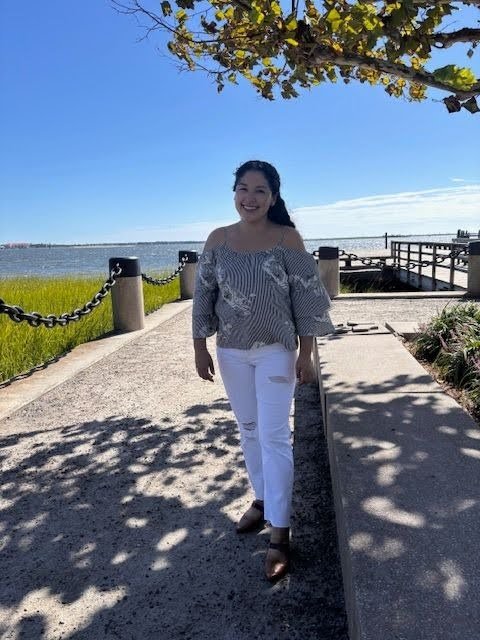
Though it was a huge culture shock, I learned English pretty fast. As far as what was different academically, the field trips, routines, lack of uniforms, and ability to rent out instruments were all, in one form or another, new to me. The teachers were pretty good about trying to include me as much as possible and pair me up with people who spoke Spanish for activities. I think it would have been harder to adjust if I had spoken a different language.
We lived with my former step-dads family here which I thought was normal because we did the same thing in Bolivia. As I grew up, however, I learned that only immediate families live together in the US. People are more communal in Bolivia, and once we started attending the Spanish church, we were able to regain some of that culture.
One of the best parts about living here was that I could check out as many books from the library as I wanted to. I loved reading, so I remember having a huge stack of books and my mom being so happy that I could have that. In Bolivia we were only allowed to rent 5 at a time.
I found it generally easy to fit in because Fairfax has a huge Hispanic community. There were some instances though that made me feel like I was not Latina enough because the majority of the Hispanic population was from Central America, and those cultures vary from South American culture. I remember asking for a straw in Bolivian Spanish and the janitor from El Salvador was like, “you can’t say that word” because it meant something different in El Salvador.
Liberty’s Promise helped me become more civic-minded. The field trips were created with immigrant students in mind, so I got more out of them than regular ones through school. I remember once we went to a jury trial, and I remember thinking “wow I never would have done this if I were not in Liberty’s Promise.” They also provided lunch afterwards which was really nice because a lot of immigrant families are struggling to get by financially. Liberty’s Promise helped me build community too because I got to know other immigrant youth from other high schools and volunteer within the local organizations.
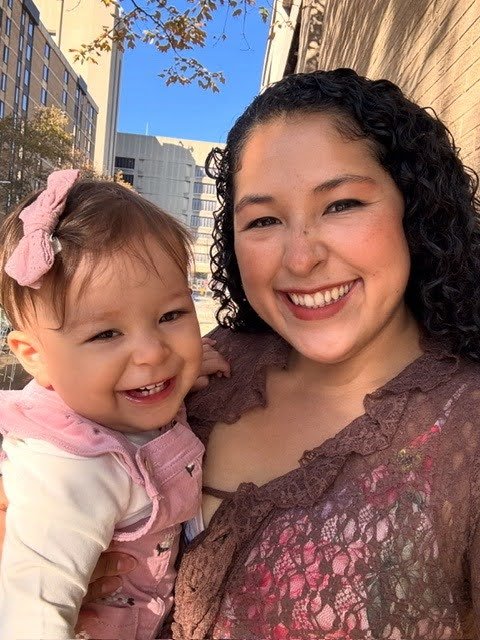
Liberty’s Promise also opened up my eyes to different academic and career opportunities. The variety of guest speaker’s professions debunked the myth that you can only be a doctor or a lawyer. Their lectures inspired me to look outside of the prescribed immigrant career paths. I remember getting to visit American University and being grateful that I could then consider it as an option. Not all cultures value college, and a lot of the students felt that they were expected to start working right out of high school. This program makes sure that students know all of the options that are available to them, regardless of where they come from, their legal status, or how long they have lived in the US. The experiences that Liberty’s Promise offered students gave them something to talk about on college applications, and program officers provided support on filling out the applications.
I majored in biology at Christopher Newport University because I thought I would pursue a pre-med path. In hindsight, I wish I had heard more about other options. Anyway, I took the MCAT, but then in the last year of college, I had a recruiter talk to me about Teach for America. At that point, I had been very involved with a service program called Youth Volunteer Corps and had the chance to teach a class on leadership. I was very receptive to understanding how I could integrate these passions into my life after college. After graduating, I decided to do Teach For America for two years and then reassess whether I wanted to further pursue the educational or medical field.
We taught in a very impoverished area in Connecticut with stark socioeconomic differences between the neighboring communities. This experience helped me grow as an adult, but being a young teacher in a pretty rowdy school was a tough experience. I also obtained my masters at Johns Hopkins University in Education during this time. Funny enough, on the first day as I was trying to open my door, one of the teachers came up to me and asked, “Can I help you with something honey?” She thought I was a student!
Upon completing my contract with Teach For America, I was feeling quite burnt out. I transitioned back to the medical field with Scribe For America. During that time I worked as a clinical tech as well alongside nurses and took care of patients, and was planning to go forth on the path to being a physician. However, it was not long until I got really burnt out by it. I was frustrated that neither of these paths were working for me, so I looked for post bac programs. I ended up doing the Advanced Biomedical Sciences program at George Mason. Thankfully I was able to get a great job as a safety associate in drug safety. We work to ensure the safety of clinical studies on cancer by looking at the drugs used and their side effects. We then process this information and report it to the FDA. In college I was really involved with Be The Match which is the national bone marrow registry, so that interest translates to my current job which is nice.
My advice to current students is try to not limit your career options. Utilize Youtube, and watch “day in the life” videos of careers that interest you. Find out what you like by asking a lot of questions to your counselors and other adults. I come from a background where there is a wall between kids and adults. You respect them and do what they tell you to do, but you don’t talk to them like a friend. Here, it is good to have interactions with adults that are not always rigid; there is some give and take and you can laugh with them. I wish I would have asked my teachers more questions about what else is out there. I think a lot of high schools would benefit from having Liberty’s Promise.”
Thank you Denisse for sharing with us your experiences as an immigrant in the US. We know that your story will resonate with many readers, inspiring them to dream beyond society’s expectations and have the courage to imagine a career that reflects their interests. It most often is not a straightforward path, but a promising one, as is showcased here.
Thank you to our community for your ongoing support. Donate today to help us continue empowering youth to achieve their full potential.
Donate Today!